Silvia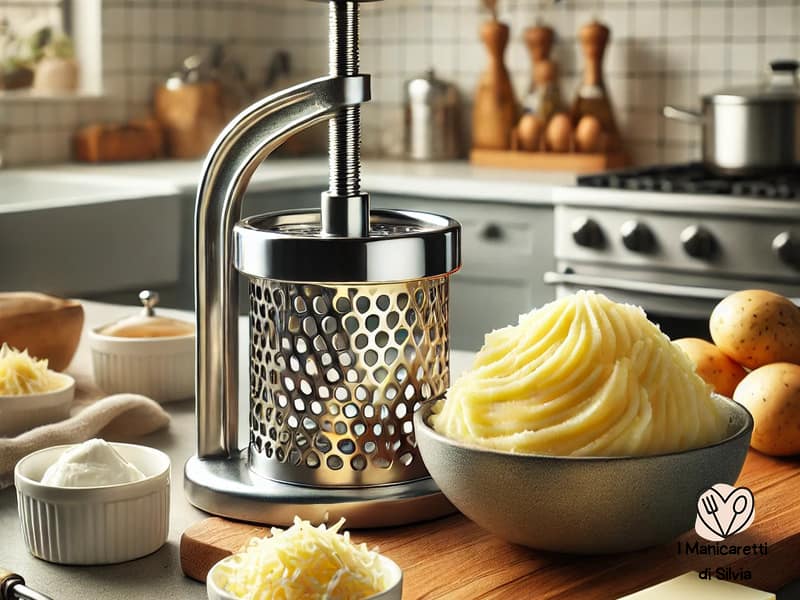
Potato ricer which one to choose: comparison of manual and electric models, features, tips and best products.Have you been looking for “potato ricer which one to choose”? Keep reading…
The potato ricer is one of the most versatile and essential kitchen tools, perfect for creating creamy mashed potatoes, flawless gnocchi, and even passatelli. But with so many options available, how do you pick the best potato ricer for your needs? In this article, we’ll explore the key features, different types, and top models on the market to help you find the perfect one.
Choosing the right potato ricer has never been so easy! In this article, you’ll discover the key features, differences between available models, and the best uses of this versatile tool. I’ll guide you in choosing between manual, electric, and professional models to help you find the perfect potato ricer for your kitchen.
What is a Potato Ricer and What is it Used For?
A potato ricer is a kitchen tool designed to transform boiled potatoes, vegetables, or other foods into a soft, uniform texture. Traditionally used for making mashed potatoes, it is also essential for preparing gnocchi, passatelli, or mashing cooked vegetables for soups and purees.
Thanks to its ease of use, the potato ricer has become an indispensable ally in kitchens worldwide, whether for professionals or home cooking enthusiasts.
Which Potato Ricer to Choose: Different Types
There are several types of potato ricers, each with specific characteristics. Let’s take a detailed look at the main ones.
1. Manual Potato Ricer
This is the classic model, consisting of a manual press with a perforated container and a lever to mash the food.
Pros:
- Affordable and easy to use.
- Perfect for small amounts of food.
- Does not require electricity.
Cons:
- Requires manual effort.
- Less suitable for large quantities.
2. Electric Potato Ricer
The electric potato ricer is a motorized device that automates the mashing process, reducing effort.
Pros:
- Ideal for large quantities of potatoes or vegetables.
- Fast and easy to use.
Cons:
- Higher price compared to manual models.
- Requires a power outlet.
3. Professional Potato Ricer
Professional models, available in both manual and electric versions, are designed for superior performance.
Pros:
- High-quality materials, such as stainless steel.
- High durability and resistance.
- Larger capacity.
Cons:
- More expensive.
- Often bulkier.
4. Multifunction Potato Ricer
Some potato ricers come with accessories to prepare passatelli, gnocchi, or even squeeze citrus fruits.
Pros:
- Versatile.
- Great for those looking for a single tool for multiple uses.
Cons:
- May be less efficient compared to models designed for specific tasks.
Materials and Design: What to Consider
When choosing a potato ricer, the material is a crucial aspect to keep in mind.
- Stainless Steel: Resistant to rust and easy to clean, it is ideal for frequent and intensive use.
- Durable Plastic: Lighter and often more affordable, but less durable over time.
- Aluminum: Lightweight and resistant, but can oxidize over time.
In addition to materials, consider the design:
- Ergonomics: A comfortable handle makes the tool easier to use.
- Capacity: Models with larger containers are perfect for larger quantities.
- Ease of Cleaning: Look for models that can be easily disassembled or are dishwasher safe.
Best Potato Ricers on the Market: Which to Choose
1. OXO Good Grips Potato Ricer
-
- Features: Manual model with a stainless steel body and soft, non-slip handle for comfort.
- Pros: Ergonomic, durable, and easy to clean.
- Cons: Requires manual effort.
- Ideal for: Those who value comfort and quality in a manual tool.
2. Cuisinart Electric Potato Masher and Ricer
-
- Features: Electric model with a powerful motor and removable stainless steel blades.
- Pros: Perfect for large quantities, fast and efficient.
- Cons: Higher price and requires power.
- Ideal for: Families or anyone who cooks in bulk.
3. Professional Stainless Steel Potato Ricer
-
- Features: Heavy-duty design, ergonomic handles, and suitable for gnocchi and other recipes.
- Pros: Long-lasting and versatile.
- Cons: Bulky and may require more storage space.
- Ideal for: Serious home cooks and professional chefs.
How to Use a Potato Masher in the Kitchen
The potato masher isn’t just for mashed potatoes. Here are some creative ideas:
- Mashed potatoes: The masher ensures a soft and uniform texture.
- Gnocchi: Perfect for mashing potatoes without lumps.
- Passatelli: Use specific accessories to make this traditional Italian dish.
- Soups and purees: Mash cooked vegetables for delicate creams.
- Citrus juicing: Some multifunction models can also be used as juicers.
Tips for Using and Maintaining Your Potato Masher
To get the most out of your potato masher and extend its lifespan:
- Cut potatoes in half: This makes mashing easier.
- Use well-cooked potatoes: Hard potatoes may damage the tool. For optimal cooking, consider using an electric steamer.
- Clean immediately after use: Dried food residues can be hard to remove.
- Store in a dry place: Prevent rust on metal models.
Potato Masher vs. Other Kitchen Tools
Potato Masher vs. Blender
- Potato masher: Maintains the soft and natural texture of foods.
- Blender: Tends to make the texture too liquid, unsuitable for gnocchi or mashed potatoes.
Potato Masher vs. Food Mill
- Potato masher: Faster and more practical for small quantities.
- Food mill: Better for smooth purées without skins or seeds.
Potato Masher vs. Garlic Press
- Potato masher: Suitable for large quantities of food.
- Garlic press: Smaller and specific for garlic or small portions.
Potato Ricer Which One to Choose for Specific Needs
- For gnocchi: Choose a model with wide holes to achieve the right consistency.
- For passatelli: Opt for a masher with dedicated accessories.
- For large quantities: An electric model will save time and effort.
Potato Ricer Which One to Choose: Maintenance Tips
Keeping your potato masher in perfect condition is essential for its durability. Here are some tips:
- Immediate cleaning: Avoid letting food dry on the plates. Use warm water and a gentle brush.
- Avoid harsh detergents: For stainless steel models, use specific metal cleaners; for plastic ones, mild soaps are better.
- Lubrication: For professional models with moving parts, periodically check and lubricate the joints.
Potato Masher for Special Needs
Beyond classic mashed potatoes, a potato masher can be used for:
- Preparing baby food: Perfect for mashing cooked fruits and vegetables for little ones.
- Sauces and purées: Excellent for creating smooth bases for soups or sauces.
- Ethnic recipes: For instance, it can be used to make “batata purée” from Brazilian cuisine or light doughs from Indian traditions.
Differences Between Professional and Household Potato Mashers
Professional models, like those used in restaurants, are often more robust and durable. Typically made entirely of stainless steel, they can handle large volumes without compromising the quality of the result. However, they can be heavier and bulkier, making them less suitable for home kitchens with limited space.
Potato Masher: Conclusion
Now you know everything about choosing the perfect potato masher. Which one to buy depends on your needs and budget. If you’re looking for an affordable and practical option, the manual potato masher is a great choice. If you want speed and convenience, electric models are ideal. Finally, for cooking enthusiasts, professional models are a valuable ally for complex preparations. Whatever your choice, a quality potato masher will make preparing your dishes simpler and more enjoyable!