Silvia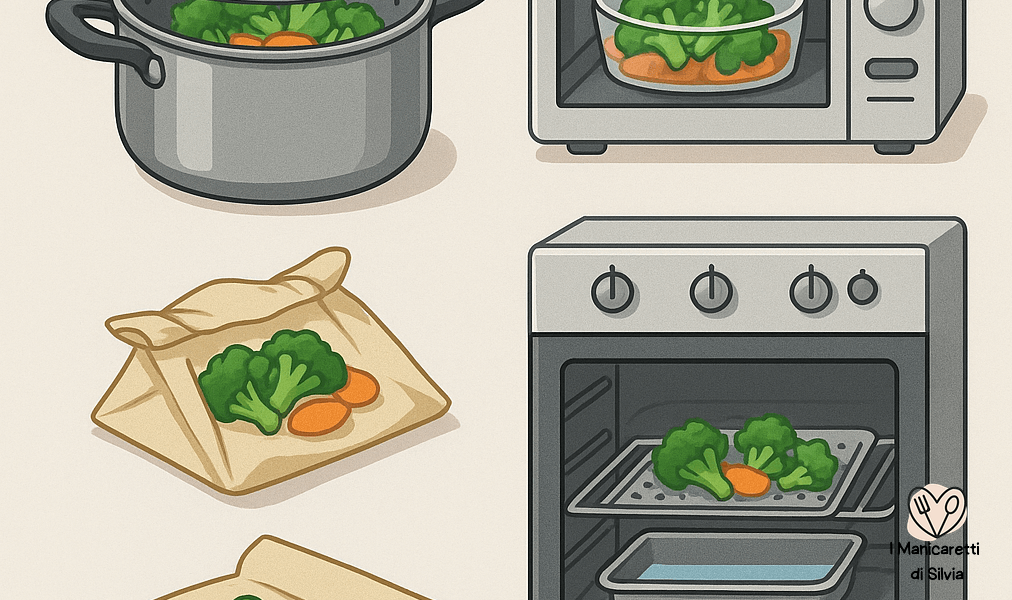
How to Steam Without a Steamer: A Practical Guide and Alternative Methods.
Heard about the benefits of steaming but don’t have a steamer? No worries: there are several easy, DIY methods to steam food using tools you already have in your kitchen. In this guide, you’ll learn how to steam in a pot, in the microwave, with parchment paper, and even in a regular oven — with tips, benefits, and practical recipe ideas.
DIY Steaming: All the Methods to Cook Without a Steamer
You’ve heard all about the benefits of steaming, but don’t have a steamer? No problem: there are plenty of simple and effective ways to steam food using tools you already have at home. In this guide, you’ll find all the best steamer-free techniques — from the classic pot-and-strainer combo to using the microwave. I’ll also explain when it might be worth investing in a steam oven, with pros and cons, plus handy recipes and links to help you start steaming like a pro.
Why Choose Steaming?
Steaming is one of the healthiest cooking methods: it requires no added fats, preserves the vitamins and minerals in food, and keeps flavors intact. It’s especially great for vegetables, tofu, and grains.
Steaming:
-
reduces nutrient loss,
-
maintains original taste and texture,
-
is ideal for light or vegan diets,
-
is perfect for meal prep in advance.
How to Steam Without a Steamer: 4 Easy Methods
1. Steaming with a Pot and Metal Colander
Do you have a pot and a stainless steel colander? You can quickly improvise a steamer pot in just a few seconds:
-
Fill the pot with about 1 inch (2-3 cm) of water.
-
Place the colander inside, making sure it does not touch the water.
-
Put the food in the colander.
-
Cover with a lid and turn on the heat.
Check that the water doesn’t completely evaporate; add more water during cooking if needed.
2. Steaming with Parchment Paper (En Papillote)
A very handy method to steam food without special tools is using parchment paper:
-
Take a sheet of parchment paper.
-
Place the ingredients inside, along with about 1 tablespoon of water or lemon juice.
-
Fold the paper into a sealed pouch.
-
Bake at 350°F (180°C) for about 20–30 minutes.
This method is perfect for tofu and vegetables—it traps moisture and enhances flavor.
3. Steaming in the Microwave Without a Steamer
ou can easily steam food in the microwave using a DIY setup:
-
Place the vegetables in a microwave-safe bowl.
-
Add 1–2 tablespoons of water.
-
Cover with a small plate or microwave-safe plastic wrap (leave a small vent).
-
Cook on medium power for 3–5 minutes, depending on the ingredients.
Broccoli, cauliflower, and Swiss chard steam perfectly with this method.
4. Steaming in the Oven
If you have a steam oven, use it! But even a regular oven can be adapted for steaming:
-
Place a dish of water on the bottom rack of the oven.
-
Arrange the food on a perforated baking tray above it.
-
Cover with aluminum foil if desired (optional).
This method works well for larger portions or longer cooking times.
Steam Oven: Pros and Cons
A steam oven is a very useful appliance, but not essential. Here’s a quick look at its advantages and disadvantages:
Pros:
-
Even, gentle cooking
-
Optimal nutrient preservation
-
Excellent for reheating already cooked food
Cons:
-
Higher cost compared to a conventional oven
-
Requires more frequent cleaning and maintenance
I also recommend reading the article about the electric steamer, where I explain how it works and its benefits compared to other methods.
Easy Recipes to Start with Steaming
If you’d like to try steaming but don’t know where to start, here are a few simple ideas you can adapt to your preferred method:
-
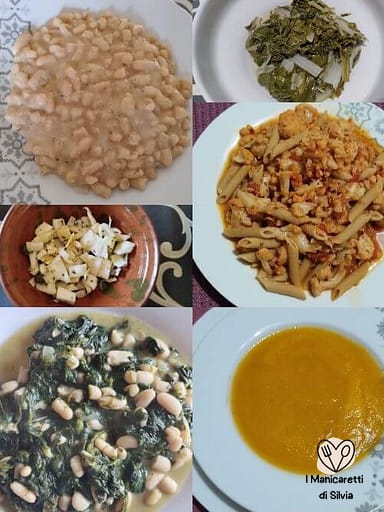
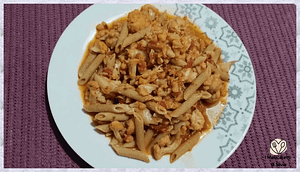
Pasta with Cauliflower: Steam the cauliflower first, then sauté it briefly with pasta. It’s a great trick for soft, tender vegetables that aren’t overboiled.
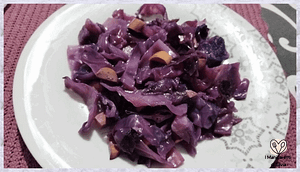
- Red Cabbage: I steam it to soften it before tossing it in a pan or dressing it with light sauces.
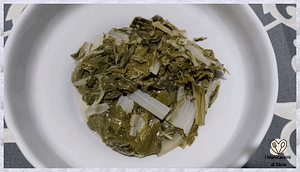
- Swiss Chard: Steamed and seasoned with olive oil and lemon, they keep their flavor and nutritional value intact.
Steaming: What to Cook and Recommended Times
One of the most common questions is what to steam and how long it takes. Steaming works well for many ingredients:
-
Zucchini, spinach, and chard: only need 4–6 minutes.
-
Carrots, broccoli, and cauliflower: 8–12 minutes.
-
Potatoes and pumpkin: 15–25 minutes depending on size (15 minutes if diced).
-
Tofu: 6–8 minutes to heat and soften it.
-
Green beans: 7–10 minutes.
Cooking time varies depending on thickness and how the food is cut: smaller pieces cook faster. Avoid opening the lid often to prevent steam from escaping. If you’re just starting out, check doneness by piercing the food with the tip of a knife — it should go in easily without the food falling apart.
Frequently Asked Questions About Steaming Without a Steamer
Can I use a plastic colander?
It’s best to avoid it: heat may deform it or release harmful substances. Opt for stainless steel or certified high-temperature silicone.
How can I season steamed foods?
You can use herbs, lemon, garlic, ginger, curry, or miso—either in the water or added after cooking.
Does steaming make food bland?
Not at all! Since flavors aren’t lost in boiling water, they actually stay more concentrated.
How to steam without a steamer: conclusion
Steaming without a steamer is simple, affordable, and accessible to everyone. With just a few tools, you can make healthy, flavorful meals without sacrificing convenience or variety.
To recap: how can you steam food without a steamer? Start with vegetables, try out the different DIY methods, and find what works best in your kitchen!
If you love these light and flexible cooking methods, check out my colorful fruit salad recipe—a fresh idea to round off your meal!