Silvia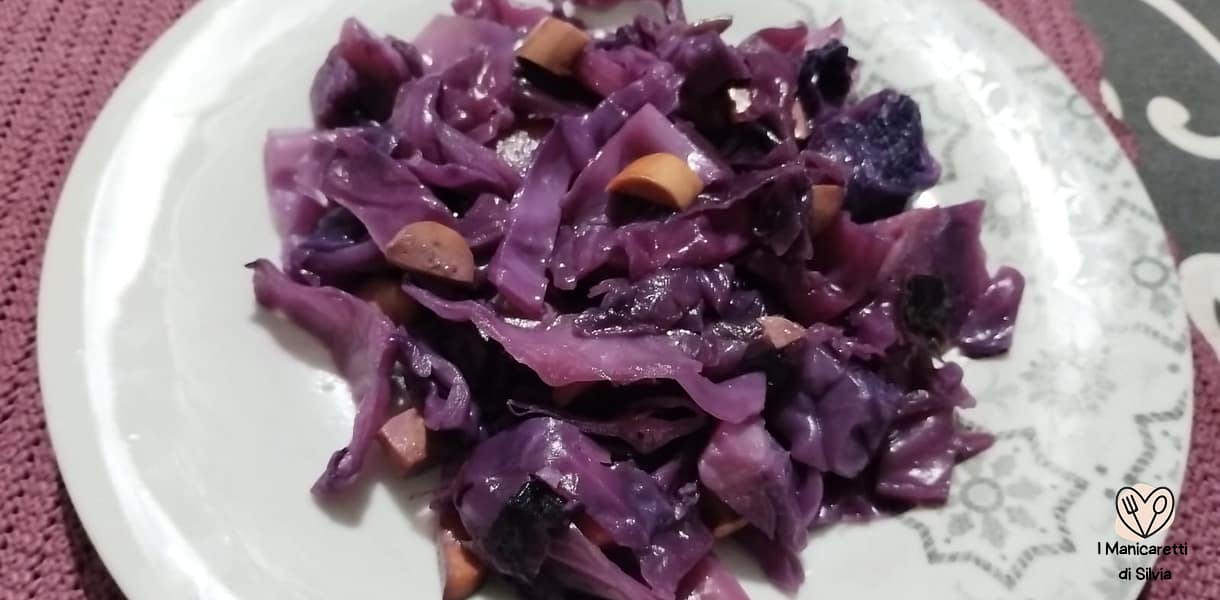
How to cook red cabbage? It’s a common question when you want to bring a flavorful and healthy dish to the table.
Red Cabbage: How to Prepare a Delicious Recipe and Its Variations
Learn how to cook red cabbage with a tasty and versatile recipe, perfect for any occasion. I will guide you through the steps to create a flavorful dish and offer some interesting variations to customize the preparation based on your tastes and the ingredients you have on hand.
How to Cook Red Cabbage: Ingredients
Serves 2:
- 1/2 head of red cabbage (about 7 oz)
- 1/4 onion
- 1 glass of white wine
- 2 vegetarian sausages (about 3 oz)
- Salt
- Olive oil
- Water.
Sautéed Red Cabbage: Preparation
Cooking the cabbage
First, let’s cook the cabbage. While the recipe suggests using half a cabbage for two servings, I recommend cooking the whole head and enjoying it over two days. The dish I’m sharing is a hearty main course, and a whole cabbage might be too much to finish in one go! You can prepare the same dish the next day or experiment with variations—or even enjoy it as a standalone meal.
So, how to cook it well? In my experience, the best method is steaming: in about an hour, you’ll have perfectly tender cabbage ready to mix with other ingredients. If you don’t have a steamer, here’s a guide to help you choose an electric steamer.
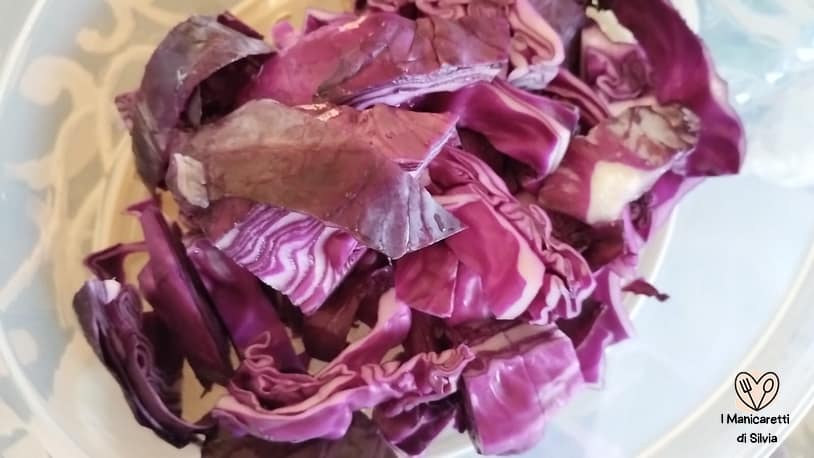
Here’s how I prepare it: slice the red cabbage and arrange it on the steamer trays. I usually divide it between two trays—one to use right away and the other to save for the next day.
While waiting for the cabbage to cook, why not prepare another dish? Try making radicchio risotto!
Let’s start!
Once your first dish is underway, let’s proceed with the second course. Slice the onion and sauté it in a tablespoon of oil over medium heat. As soon as it turns golden, add a glass of water to help it cook thoroughly. While the water is reducing, slice the veggie sausages. When the water has almost fully evaporated, add the sausages to the onions and let them brown.

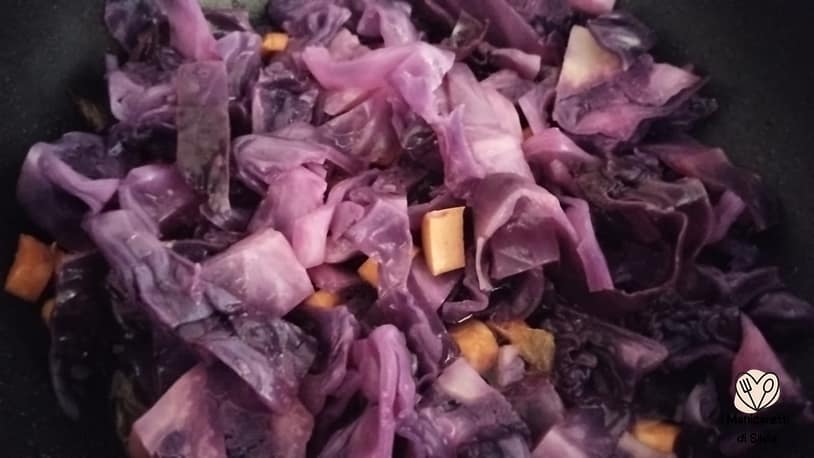
Let the wine evaporate completely, and then serve your dish.
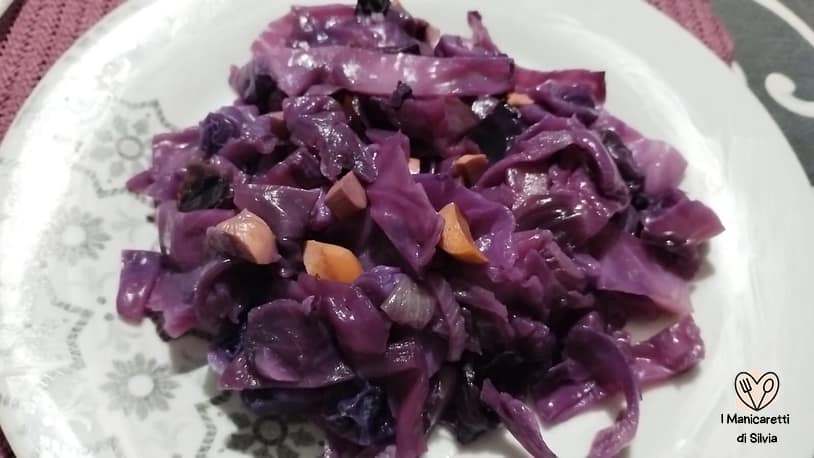
Red cabbage isn’t just flavorful—it’s a powerhouse of nutrients, offering a variety of vitamins, minerals, and antioxidants that support overall health.
1. Rich in Antioxidants
The vibrant color of red cabbage comes from anthocyanins, which are potent antioxidants. These compounds help combat oxidative stress, protecting cells from damage caused by free radicals.
2. High in Essential Vitamins
Red cabbage is an excellent source of vitamin C, crucial for immune system support, and vitamin K, which plays a key role in bone health and blood clotting.
3. Low in Calories
With only 30 calories per 100 grams, red cabbage is a great choice for low-calorie diets. Despite its low-calorie count, its high fiber content makes it filling and satisfying.
4. Gut Health Benefits
The fiber in red cabbage promotes regular digestion and supports a healthy gut microbiome. When fermented into sauerkraut, it provides natural probiotics, further boosting gut health.
5. Supports Vision and Skin Health
Red cabbage contains vitamin A and carotenoids, which are beneficial for maintaining healthy skin and supporting eye health.
Conclusion
Now that you’ve explored various ways to cook red cabbage and learned about its health benefits, it’s time to get creative in the kitchen. Whether you stew it, bake it, or turn it into sauerkraut, red cabbage is a versatile and nutritious addition to your meals.
If you enjoyed this guide, share it with others and comment with your favorite variation! For more delicious recipes and creative cooking ideas, visit my website for inspiration.