Silvia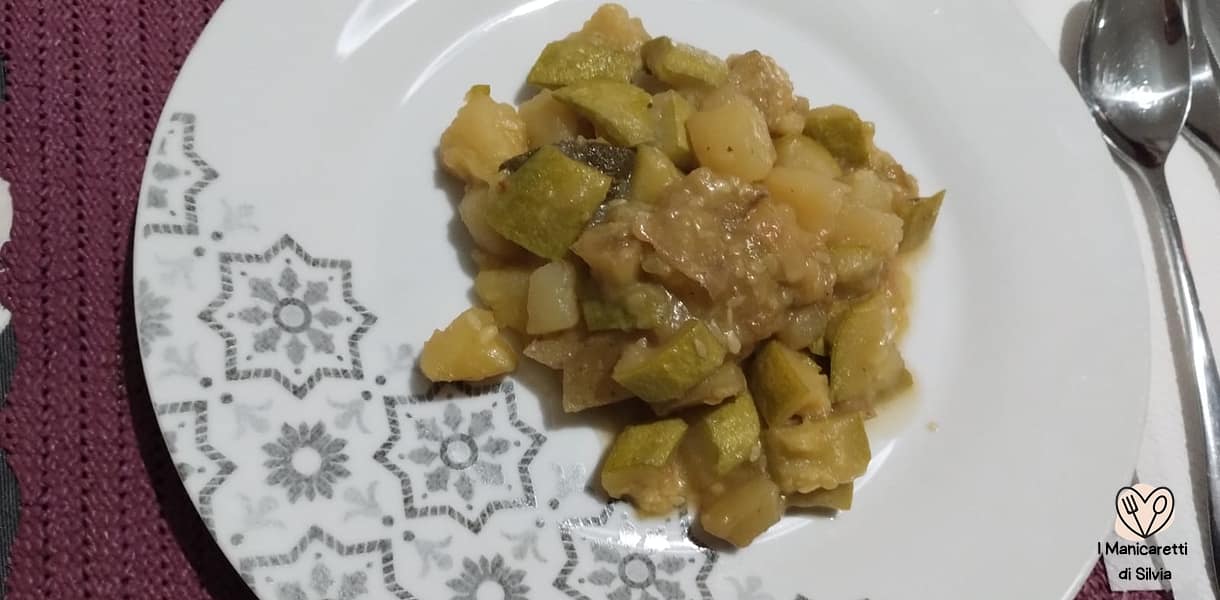
Zucchini stew is a light, versatile dish perfect for any season. It’s incredibly simple to prepare, and I’ll show you how shortly.
Typically, it’s a meat and vegetable stew, but this version is 100% plant-based, making it suitable for everyone. Combined with potatoes, it becomes a hearty main course. Add sun-dried tomatoes and sage for a balanced and flavorful meal.
Zucchini and Potato Stew
Vegetable stew is ideal as a main course due to the carbohydrates in potatoes, making it a great pasta substitute. Traditionally, it includes meat and zucchini, but this vegan version is delicious, light, and easy to digest.
With just a few common ingredients, you can create this tasty dish. The main components are vegetables, which are flavorful on their own and enhanced with special seasonings. Let’s see what you’ll need!
Zucchini Stew: Ingredients
Servings for 2 people:
- 1 tablespoon of oil
- 1/4 onion
- 200 g of zucchini (about 7 oz)
- 200 g of potatoes (about 7 oz)
- 2 sun-dried tomatoes
- 2 sage leaves
- 2 teaspoons of vegetable bouillon granules
- Water
Preparation
The first thing to do is slice the onion and sauté it with the oil over low heat. When it becomes slightly golden, add a bit of water to soften it. Meanwhile, cut the potatoes into coarse cubes. There’s no need to cut them into very small pieces because they will become very soft. Make sure not to peel them! You might be wondering why… Let me explain. Just like refined grains lose valuable nutrients through bleaching, so it’s better to choose whole grains, the skin contains substances that would be lost with peeling.
Add the potatoes to the pan (if needed, add water occasionally to prevent sticking) and slice the zucchini. Add the zucchini to the potatoes.
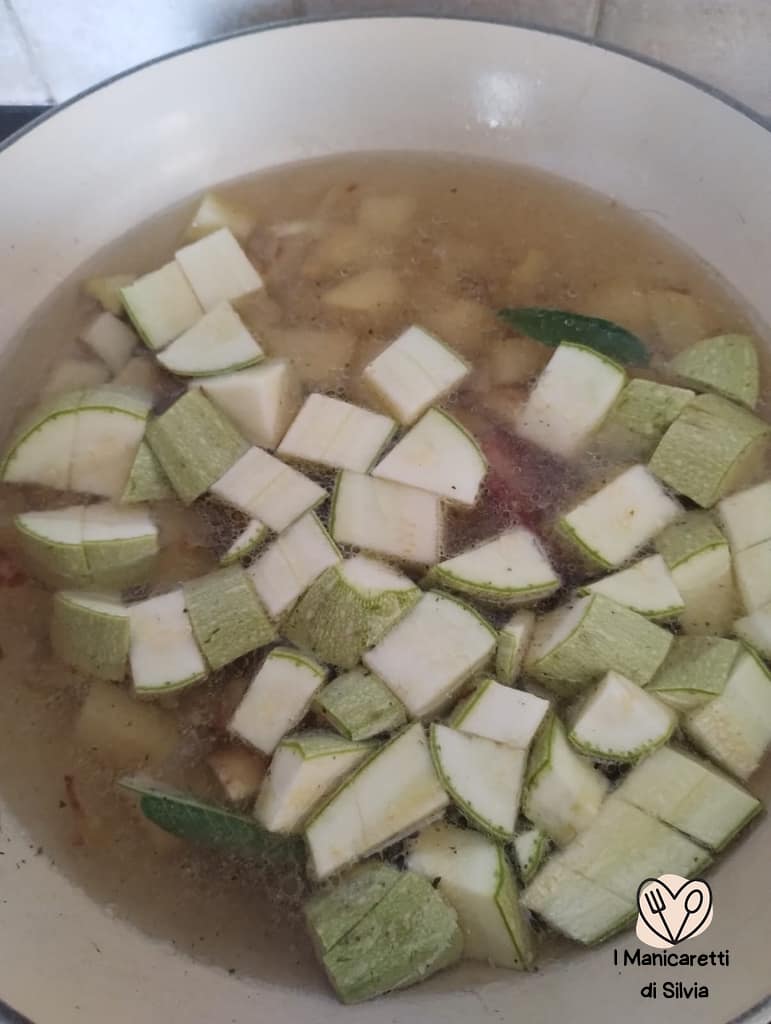
Then add the sage, sun-dried tomatoes, bouillon, and 1000 ml of water (about 4.2 cups), cover and cook on high heat. Once all the water is absorbed, your stew with vegetables is ready. Enjoy your meal!
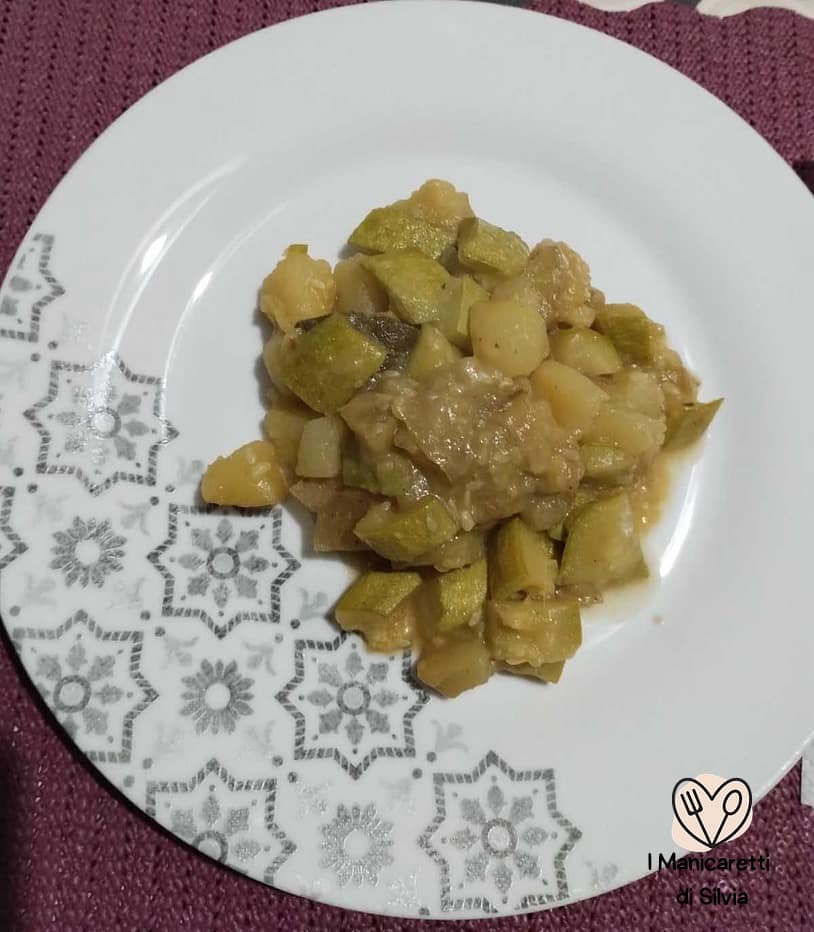
Stew with Mixed Vegetables: Variations
This light, white stew is honestly my favorite, but you can get creative by substituting various ingredients. You can make it with zucchini and peas, with carrots, tomatoes, or anything else your imagination suggests!
Nutritional Properties of the Ingredients
Benefits of Zucchini
- Zucchini is a versatile and light ingredient that adds not only flavor but also many nutritional benefits to our vegetable stew.
- Low in Calories: Zucchini is very low in calories, with about 16 calories per 100 grams, making it ideal for those looking to maintain a controlled calorie intake.
- Rich in Vitamins and Minerals: It contains vitamin C, vitamin A, and B vitamins (especially B6). Zucchini is also a good source of minerals such as potassium and manganese.
- High in Fiber: Zucchini is rich in fiber, which helps improve digestion and maintain satiety.
- Antioxidants: Antioxidants like lutein and zeaxanthin are beneficial for eye health.
Nutritional Properties of Potatoes
Potatoes are a staple food in many cuisines due to their versatility and comprehensive nutritional profile.
- Energy and Carbohydrates: They are an excellent source of complex carbohydrates, providing energy. A medium-sized potato (about 150 grams) contains approximately 110 calories.
- Vitamin C and B6: Potatoes are rich in vitamin C, which supports the immune system, and vitamin B6, important for protein metabolism.
- Potassium: They are one of the best sources of potassium, an essential mineral for controlling blood pressure and muscle function.
- Fiber: With the skin on, potatoes offer a good amount of fiber, which aids in digestion and helps regulate blood glucose levels.
Nutrients in Sun-Dried Tomatoes
Sun-dried tomatoes are a delicious and versatile ingredient that adds intense flavor to the potato and zucchini stew, as well as offering numerous nutritional benefits.
- High Nutrient Concentration: During the drying process, tomatoes lose water, which concentrates their nutrients. This makes sun-dried tomatoes a rich source of vitamins and minerals.
- Vitamin C: Even after drying, they retain a good amount of vitamin C, which is essential for the immune system and collagen synthesis.
- Lycopene: They are particularly rich in lycopene, a powerful antioxidant linked to a reduced risk of cardiovascular diseases and certain types of cancer.
- Fiber: They contain a significant amount of fiber, which helps improve digestion and maintain a feeling of fullness.
- Vitamin K and Iron: Sun-dried tomatoes are a good source of vitamin K, necessary for blood clotting, and iron, important for red blood cell production.
- Calories and Energy: They provide more calories than fresh tomatoes, making them a good source of energy, especially in small amounts.
- Potassium: High in potassium, which helps maintain electrolyte balance and blood pressure.
- Magnesium: Important for muscle and nerve function.
Benefits of Sage
In addition to the vegetables accompanying the stew, this aromatic herb boasts multiple health benefits:
- Anti-inflammatory Properties: It contains compounds like rosmarinic acid that have anti-inflammatory effects, helping to reduce inflammation and swelling.
- Antioxidants: Sage is rich in antioxidants that combat free radicals in the body, contributing to protection against aging and some chronic diseases.
- Digestive Health: It is known to aid digestion and relieve issues such as bloating and dyspepsia.
- Cognitive Support: Studies suggest that sage may improve memory and cognitive function due to its neuroprotective effects.
- Vitamins and Minerals: Sage provides vitamins A, C, and K, as well as minerals like calcium, iron, and magnesium, though in smaller amounts compared to fruits and vegetables.