Silvia
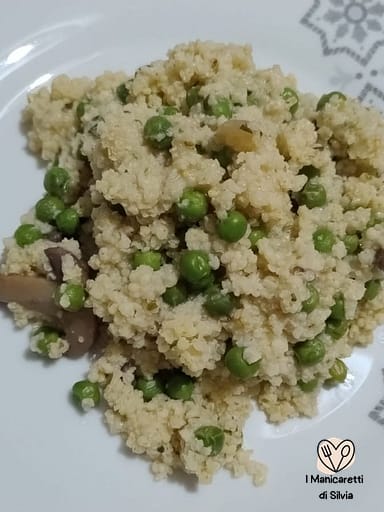
Flavorful Vegetable Couscous: a light, colorful, and tasty dish.
A light, colorful, and flavorful dish, perfect for lovers of Mediterranean flavors and for anyone looking for a healthy and quick alternative to the usual pasta or rice. Thanks to its versatility, couscous pairs wonderfully with a wide variety of seasonal vegetables and can serve as either a nutritious first course or a complete main dish.
In this article, we’ll show you step by step how to prepare vegetable couscous, with tips on variations, pairings, and ideas to make it even richer and tastier—ideal for quick lunches, light dinners, or buffet-style meals with friends.
How to Make Vegetable Couscous
Making vegetable couscous is simple and quick: just a few fresh, colorful ingredients are enough to create a light yet flavorful dish. The key is choosing seasonal vegetables, which add aroma and taste. With just a few steps, you can serve a healthy, versatile recipe that’s perfect for the whole family.
Flavorful Vegetable Couscous: Ingredients
Serves 2:
-
Extra virgin olive oil – 1 tablespoon
-
Onion – ¼ medium onion
-
Tomatoes – ¾ cup, chopped (≈100 g)
-
Couscous – ½ cup (≈120 g)
-
Bell pepper – 1 medium
-
Carrot – 1 medium
-
Zucchini – 1 medium
-
Peas – ½ cup (≈70 g)
-
Paprika – ½ teaspoon (or to taste)
-
Parsley – 1 tablespoon, chopped
-
Water – ½–¾ cup (for couscous, see package instructions)
-
Curry – ¼–½ teaspoon (optional, to taste).
Preparation
First, slice the onion and sauté it in 1 tablespoon of olive oil over medium heat. Once golden, add about ½ cup of water. Then add the peas (you can also use frozen peas).
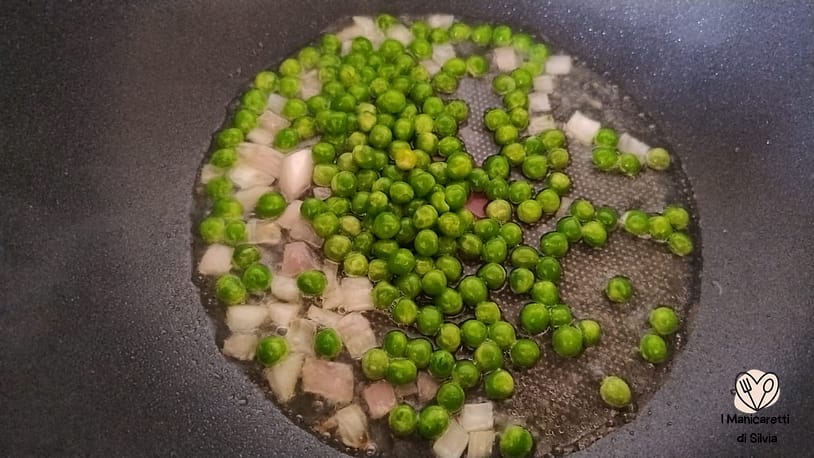
Add the chopped bell pepper and zucchini, a sprinkle of paprika and parsley. If you like, add some curry as well. Pour in 1 ⅔ cups of water (≈400 ml), add about 3 pinches of salt, stir, and cover. When the water has been absorbed (after about 30 minutes), the vegetables are ready.
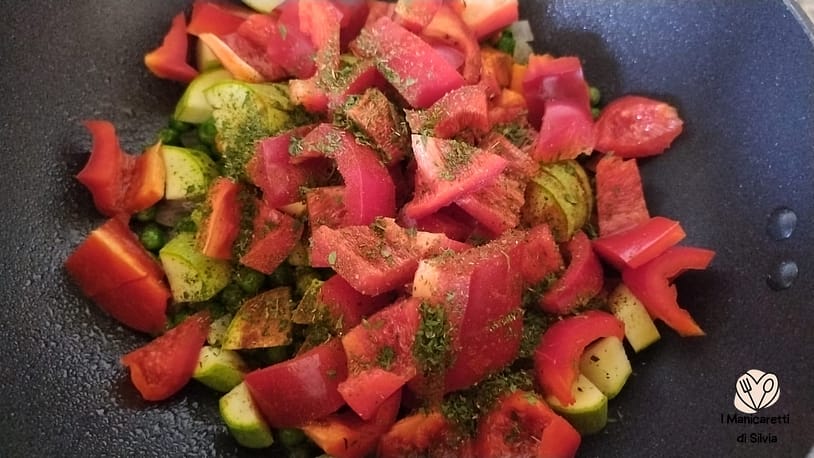
Now prepare the couscous, remembering to stir the vegetables in the pan from time to time.
I recommend following the package instructions, but they are almost always like these, which work for any quick-cooking couscous you find at the store. Pour the couscous into a large bowl, big enough to hold the vegetables later.
Bring ½ cup (120 ml) of hot water to a boil (no salt). Pour it over the couscous in the bowl, add 1 tablespoon of olive oil, stir, cover, and let sit for 5 minutes. Fluff with a fork. Add the chopped tomatoes, about 3 pinches of salt, and mix well.
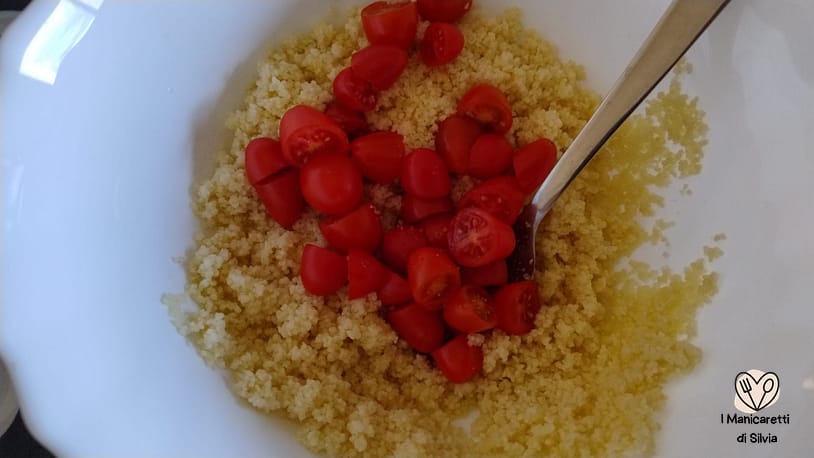
Now just wait until the peas and vegetables finish cooking. In the meantime, you can prepare a second dish — how about vegan patties in a skillet with a splash of white wine?
Once the veggies are ready, combine everything from the skillet with the couscous in the bowl and mix well.
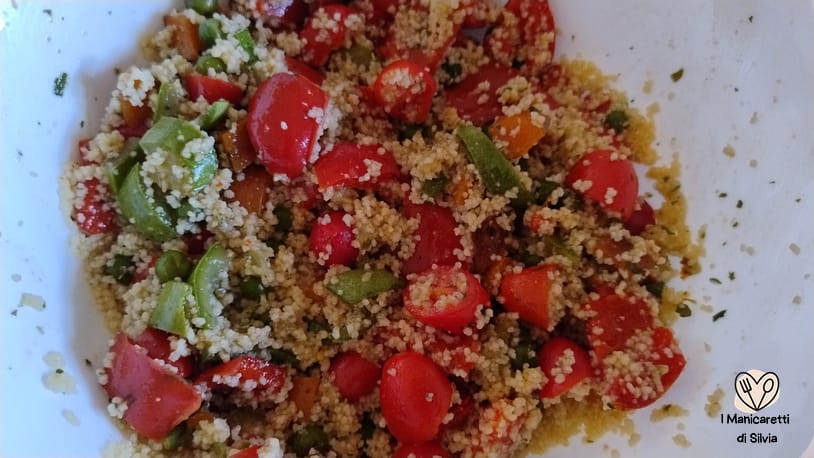
Perfect served hot, warm, or cold — ideal in every season!
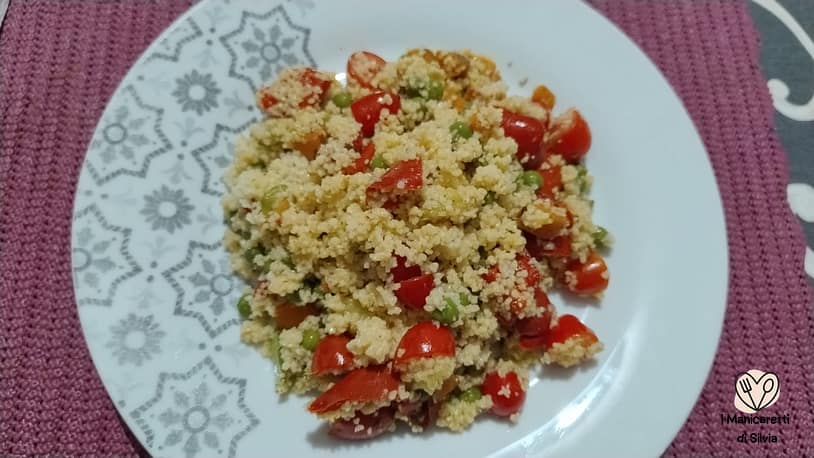
Tasty Variations & Ideas
Moroccan-Style Vegetable Couscous
For an exotic touch, add spices like cumin, coriander, and saffron, along with cooked chickpeas. The spices enhance the flavor of the vegetables, giving the dish a warm, aromatic profile — perfect for cozy autumn or winter dinners. The chickpeas boost protein content, making the meal more filling.
Sicilian-Style Vegetable Couscous
Enrich the couscous with black olives, sun-dried tomatoes, and capers. This mix creates an intense Mediterranean flavor, also delicious when served cold for picnics or quick lunches. Olives and capers add healthy fats and minerals such as sodium and iron.
Couscous with Vegan Tuna or Tofu
For a protein-packed version, add vegan tuna or tofu. Keep the seasonal vegetables for balance and color. This way you get a complete meal with carbohydrates, protein, and fiber — ideal for those who exercise or want a well-rounded dish.
Curried Vegetable Couscous
Add 1 teaspoon of curry powder and a sprinkle of fresh coriander for a fragrant, spiced couscous. This variation delivers a bold flavor without adding fats, making it perfect for anyone who loves oriental-inspired tastes.
Nutritional Properties of the Ingredients
Couscous
A valuable source of complex carbohydrates, perfect for providing long-lasting energy. Whole-grain couscous also adds fiber, which supports digestion and intestinal health.
Vegetables
Zucchini, bell peppers, carrots, and peas supply essential vitamins (A, C, K), minerals (potassium, magnesium), and antioxidants — all beneficial for the immune system and cellular protection.
Tomatoes
Rich in lycopene, a powerful antioxidant, and vitamin C, they help support heart health and protect against free radical damage.
Extra Virgin Olive Oil
Provides monounsaturated fats and antioxidants, helping to reduce inflammation and improve the absorption of fat-soluble vitamins found in vegetables.
Spices (paprika, curry, parsley)
Enhance the flavor of the dish without adding calories or fats. Many spices also have anti-inflammatory and antioxidant benefits.
Chickpeas, Vegan Tuna, and Tofu (optional)
These plant-based proteins round out the dish, making it balanced, satisfying, and ideal as a complete one-bowl meal.
FAQ – Couscous with Vegetables
What vegetables can I put in vegetable couscous?You can use any seasonal vegetables and add your favorite spices. Chickpeas or other proteins make the dish more complete and satisfying.
How do you cook couscous?
Follow the instructions on the package: usually, it rehydrates with hot water and is fluffed with a fork. Then you can mix in the vegetables and seasonings.
Can I prepare couscous in advance?
Yes, couscous keeps its flavor and texture even when cold, making it perfect for packed lunches or buffets.
Should couscous be served warm or cold?
Both work: warm for a comforting dinner, or cold for summer meals and picnics.
Conclusion – Flavorful Vegetable Couscous
Vegetable couscous is a versatile, light, and nutritious dish that’s perfect for any occasion. Thanks to the variety of vegetables, spices, and optional proteins, you can customize it to your taste and the season, creating a colorful, balanced meal packed with essential nutrients. Whether you serve it hot for lunch, warm for dinner, or cold for a picnic, it will always win you over — bringing together flavor, lightness, and health in a single dish.